
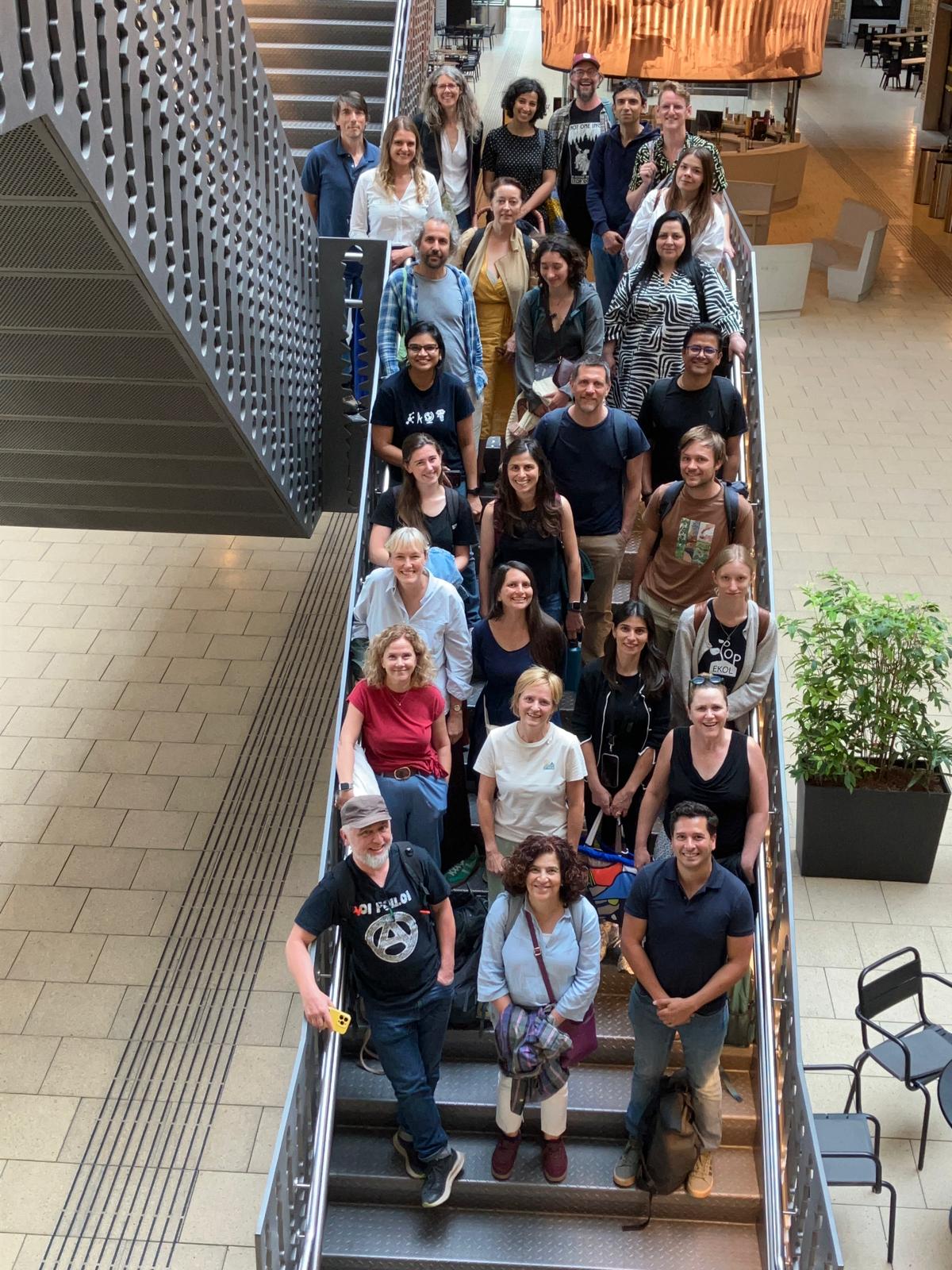
GENOA’s WG2/WG3 joint workshop on Ne/Nc ratios and genetic indicators in the wild-to-domesticated continuum took place on July 23 and 24 in the Herman Teirlinck Building Brussels. Thirty participants worked in two groups and held short plenary sessions to inform on reciprocal progress. A WG2 team led by Joachim Mergeay and Ivan Paz Vinas critically examined scientific papers containing estimates of ratios of effective to census population size in order to strengthen emerging scientific evidence that Ne/Nc ratios correlate with life history strategies, and ultimately to develop an estimation method for these ratios from life history traits. They applied reliability filters to published estimates and compiled life history traits for focal species through screening work that will extend beyond the workshop. Follow-up steps will address the development of regression models and their validation with AgeNe simulations to produce a practical, trait-based prediction tool usable across taxa.
The second team, at the interface of WG2 and WG3 led by Alicia Mastretta-Yanes and Ana Wegier examined examples of plant and animal species that contain populations spread over wild vs domesticated compartments and their intermediates. They produced a first draft of an opinion paper that presents some of these cases and derives a conceptual framework for wild-to-domesticted continua, with recommendations on how to delimit populations accounting for past and current management and gene flow, and how to estimate the Ne500 headline indicator in these continua. The results of both teams will provide guidance to conservation stakeholders on how to sample and compute genetic indicators in wild and managed populations across a variety of species for effective conservation of genetic diversity in agreement with GENOA’s WG2 and WG3 objectives.