
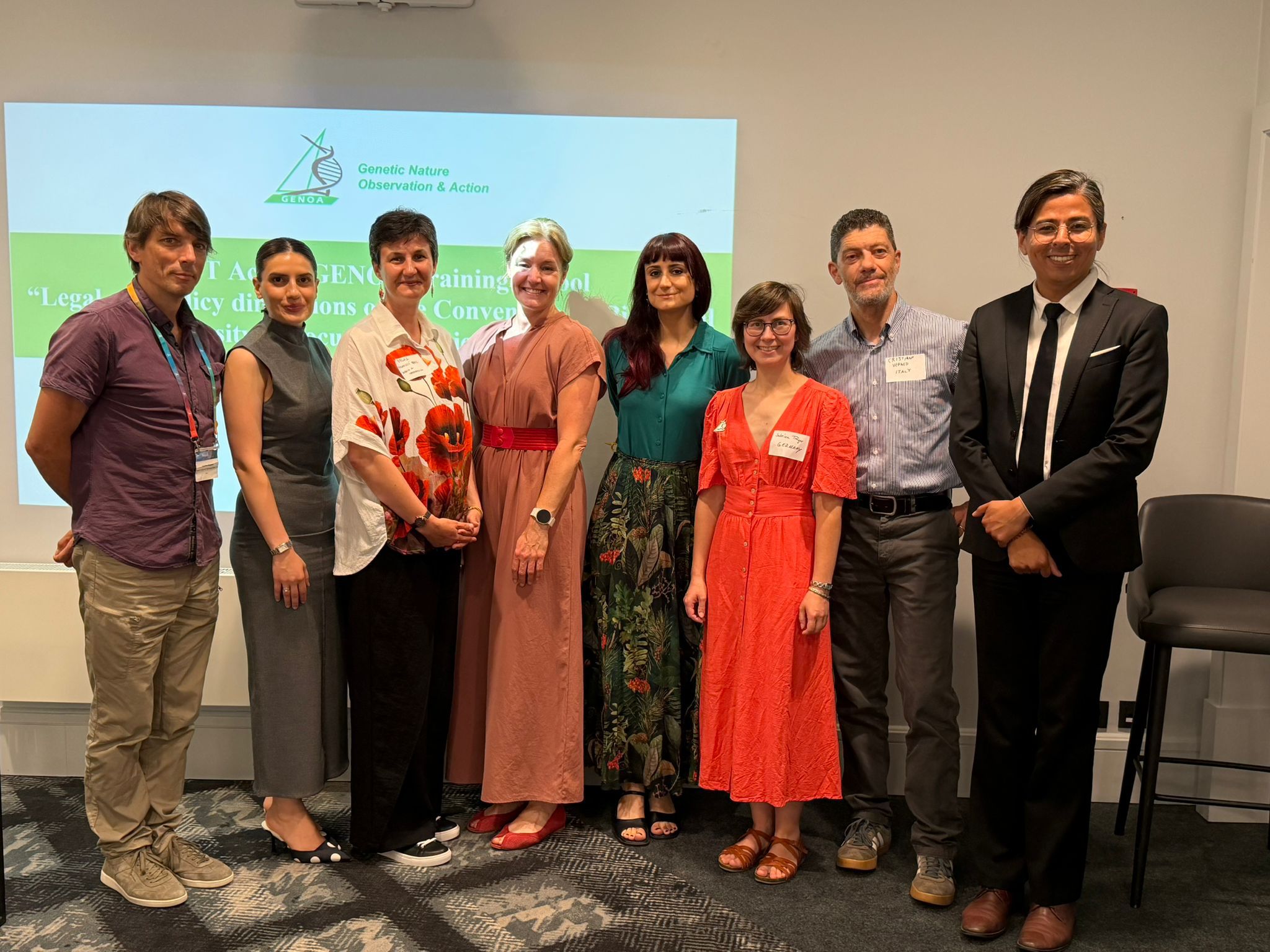
Group photo with Ms. Taguhi Paremuzyan, Third Secretary to the Mission of Armenia to the European Union and the organizing team of the COST Action GENOA Training School
The GENOA COST Action Training School on the Legal and Policy Dimensions of the Convention on Biological Diversity (CBD): A Focus on Genetic Diversity Indicators was held on 23-25 June 2026 in Brussels to strengthen capacities on biodiversity governance ahead of COP17 in Yerevan, Armenia.
The training brought together 25 participants from more than 18 countries across Europe and neighbouring countries, creating an interdisciplinary learning environment for researchers and governmental officers working at the science–policy interface. This training school acted as a platform in which participants including, natural science researchers, CBD National Focal Points, and governmental officers on biodiversity were able to meet, talk, learn, engage and discuss toward collaboration on genetic diversity. Throughout the programme, participants learned about the importance of genetic diversity for species and ecosystem adaptation and resilience, and the genetic diversity indicators under the Kunming–Montreal Global Biodiversity Framework (KMGBF), with particular attention to Target 4.
The three-day programme combined expert lectures, interactive discussions, practical group exercises, and a visit to the European Parliament. Representatives from the Mission of Armenia to the European Union and COST Association were presented in the first day of the training school to welcome the participants. Following sessions were delivered by science-policy experts from the CBD Secretariat, the European Commission, CO-OP4 CBD, National Museum of Natural History of France, Royal Belgian Institute of Natural Science and the International Union of Nature Conservation. This provided participants with diverse perspectives on biodiversity policy, law, governance, and implementation.
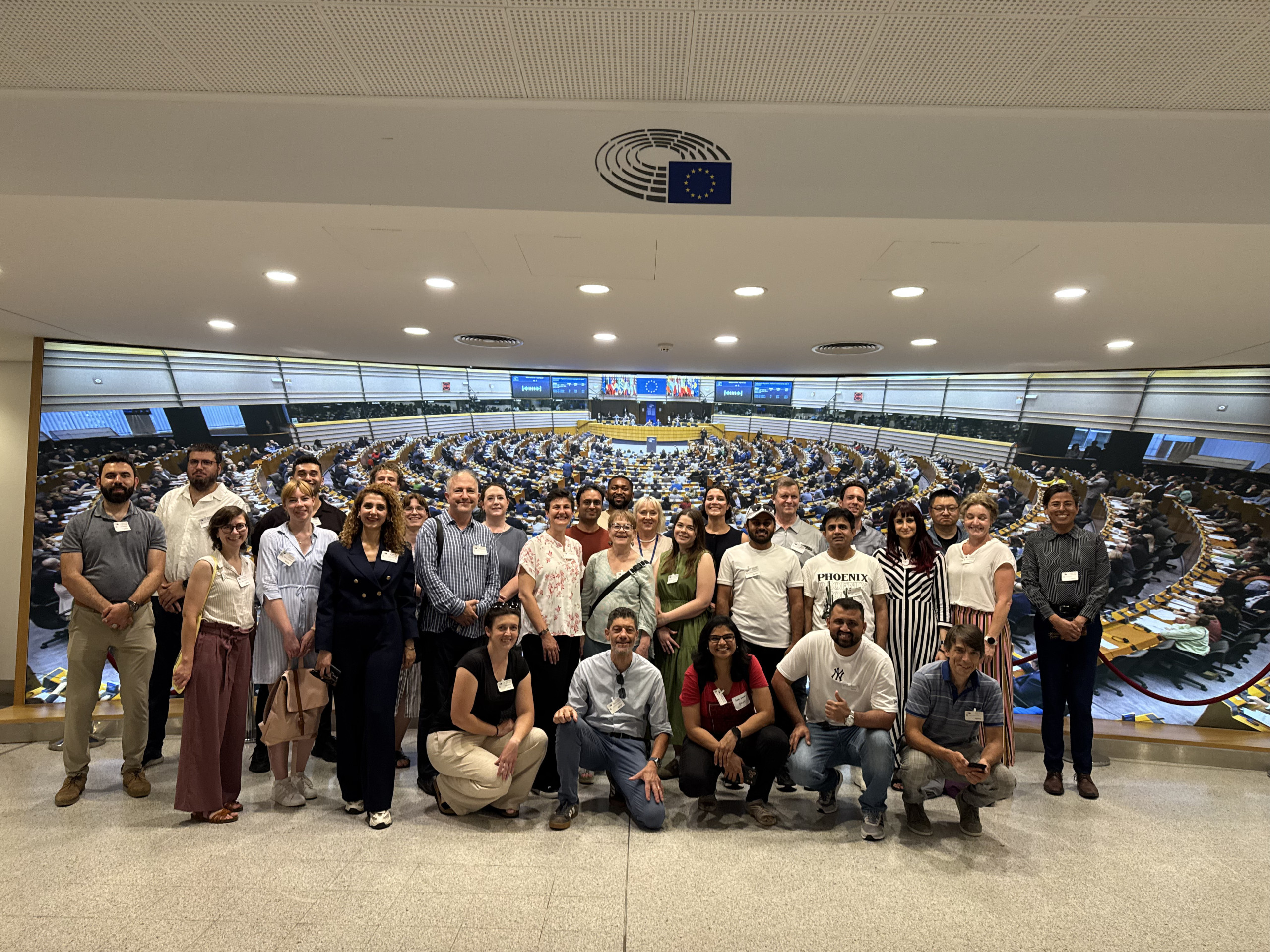
Group photo with organizing team and trainees at the European Parliament, Brussels
A key feature of the Training School was its practical approach, enabling participants to gain hands-on experience, e.g., through group exercises on CBD national reporting and negotiation simulation of the Conference of Parties (COP), where they represented Parties and observers in negotiating a draft decision on genetic diversity. These activities strengthened participants’ understanding of biodiversity governance while developing practical skills in diplomacy, negotiation, science communication, and stakeholder engagement.
Overall, the Training School fostered international collaboration, knowledge exchange, and capacity building, providing participants with the basic legal, policy, and practical tools needed to engage with the implementation of the CBD and to participate effectively in the preparations for COP17 in Armenia this October 2026.